
The 4 PM Wall: Why Early Darkness Crushes Your Mood (and What Actually Helps)
The 4 PM slump after the clocks turn back is a physiological response to shifted daylight, diminished blue-wavelength light, circadian disruption, and behavioural withdrawal (the hibernation trap). Rather than waiting for January, counteract the afternoon wall with a six-step reset: prioritize bright outdoor light within your first hour awake, explore 10,000 lux light box therapy (30 min/morning), front-load rewarding activities before sunset, schedule one low-demand pleasure daily, lock in a steady wake time, and track daily mood patterns to identify personal response thresholds.
You look up from your laptop at 4:15 pm and it’s already dark. Not dusk. Dark. And something inside you sags.
Your energy drops. Your brain goes soft. Cooking, replying to messages or going to the gym suddenly feels absurd, and all you want is a blanket and a screen. By 8 pm you’re wondering why you feel so low about an ordinary Tuesday.
Nothing is wrong with you. You’re responding to a real change in your environment, and your body notices it even when your mind is telling you to push through.
The clocks have just gone back across the US and most of Canada (1 November) and across the UK and Europe (25 October). If you live in the northern half of the world, the days keep shortening until the winter solstice in late December. This guide covers what’s going on, what the research does and doesn’t say, and a practical reset you can start today, well before January.
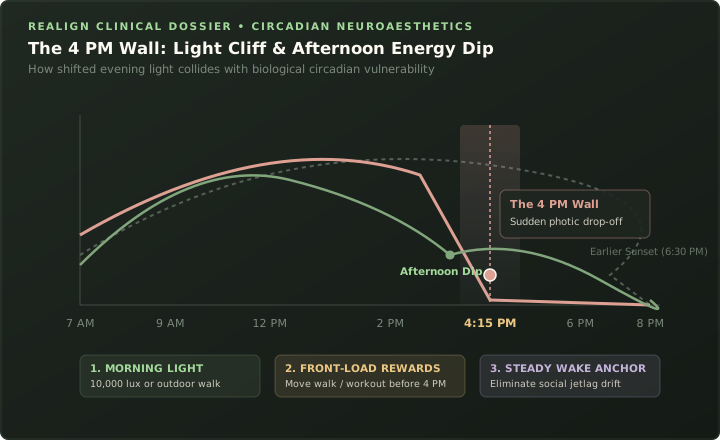
Wait, isn’t it the same amount of daylight?
Mostly, yes, and that’s what makes it so sneaky. Moving the clocks back doesn’t reduce the total amount of daylight. It moves an hour of it from your evening to your morning.
If you’re already at your desk, in a car or on a train by 8 am, that “gained” morning light is mostly wasted, while the evening light you used to enjoy after work is gone. Add the natural shortening of the days, and the darkness lands right when your afternoon energy is already dipping.
For some people that’s a mild annoyance. For others it’s the trigger for something heavier.
Winter blues or seasonal depression? Both are real
Seasonal affective disorder (SAD) is a form of depression that typically begins in the autumn and eases in spring or summer. A team at the US National Institutes of Health led by Dr Norman Rosenthal first described it in 1984, and the name stuck because the acronym is so easy to remember. A milder version, often called subsyndromal SAD or simply “winter blues,” is also recognised by medical experts. There’s even a summer version of seasonal depression, though far less is known about it.
The honest bit: no single cause has been identified. One line of research looks at specialised cells in the eye that turn blue-wavelength light, which sunlight is full of, into signals that affect alertness and mood. In one University of Pittsburgh study, people with SAD were, as a group, less sensitive to blue light than people without it, especially in winter. That’s an interesting clue, not a complete explanation. SAD also affects many more women than men, according to the NIH.
Here’s a rough way to tell where you might be:
| Dimension | Winter blues | Possible SAD |
|---|---|---|
| Mood | Flatter and grumpier, but you still have good moments | Low most of the day, nearly every day |
| Energy and sleep | Tired, sleeping a bit more | Heavy fatigue, oversleeping, hard to get up |
| Interest | Less motivated, but things feel enjoyable once you start | Losing interest in things you normally love |
| Appetite | Craving comfort food | Strong carb cravings, noticeable changes in eating |
| Thinking | A bit foggy | Trouble concentrating or deciding; hopeless or pessimistic thoughts |
| Daily life | Manageable with effort | Work, study or relationships start to suffer |
That’s a rough guide, not a diagnosis. If you recognise the right-hand column, especially if it has lasted two weeks or more or has happened in previous winters, talk to a doctor or mental health professional.
Why you want to hibernate (and why it backfires)
When it’s dark and cold, staying in feels like the sensible choice, and a little of it is. But the pattern that tends to make seasonal lows worse is withdrawal: less light, less movement, fewer people, more couch. Each one feeds the next. That’s why therapy designed for SAD puts so much weight on getting people doing small, enjoyable things again.
Kelly Rohan, a University of Vermont researcher who has run some of the biggest trials of CBT for SAD, recommends planning undemanding but enjoyable activities, like seeing a friend for coffee, to break out of hibernation mode, as the Associated Press reported this month.
If you’ve been drifting toward the sofa for days on end, our guide to why bed rotting makes you more tired explains why a weekend in bed often leaves people feeling heavier, not restored.
The Early-Dark Reset: six moves
None of these need willpower, a gym or a perfect routine. Start with one tonight and add another tomorrow. And start at the first sign of a dip, not in January.
- Get outside light in the first hour of your day. A short walk counts, even under cloud. Doctors recommend walking outside on overcast days too, because even a grey sky is typically far brighter than the inside of a house. If you can’t get out, sit by your brightest window with the curtains open and keep the lights on during the day.
- If your lows come back every winter, look into a light box. Studies of seasonal depression have used a light of about 10,000 lux for 30 minutes each morning, roughly 20 times brighter than ordinary indoor light. You can read or eat breakfast while you sit in front of it. In a randomised trial of 177 adults with seasonal depression, light therapy and a structured CBT programme for SAD worked about equally well, with around 47% of people in each group in remission on one key measure after six weeks. A 2025 meta-analysis reached a similar conclusion, with a caveat: most of the trials come from one US research group. One catch: light therapy’s benefits can fade when you stop using it, while CBT has been shown to have more durable effects.
A few practical notes. Some products marketed for SAD are too dim to do much good, according to Yale’s Dr Paul Desan, and prices run from about $50 to over $400. Yale’s Winter Depression Research Clinic publishes a list of light recommendations, and the nonprofit Center for Environmental Therapeutics has a guide to choosing a light box. Light boxes are generally considered low risk, but check with a doctor first if you have an eye condition, bipolar disorder, or take medication that makes your eyes sensitive to light. - Front-load the good stuff. Move the best part of your day ahead of the dark: a lunchtime walk, a midday workout, a 3 pm coffee with a colleague. If your only enjoyable plan is after sunset, it’s much harder to follow through. (This is a practical rule of thumb, not a studied protocol.)
- Book one small pleasure a day, and one person a week. Undemanding counts: a favourite podcast on a walk, a hot drink with your phone in another room, a ten-minute call. This is the heart of behavioural activation, the part of CBT that gets you moving before you feel like it. If lists feel like one more chore, our dopamine menu guide shows how to build a short one that actually works.
- Anchor your sleep. Doctors recommend a regular sleep schedule for seasonal depression. Pick a wake-up time and keep it, weekends included, even when the dark mornings tempt you to stay under the covers. If your brain gets loud at night, here’s how to stop overthinking at night.
- Track the pattern. Spend thirty seconds a day noting your mood, your energy and how much daylight you got. After two or three weeks you’ll see what actually moves the needle for you, and you’ll have something concrete to show a doctor if you decide to get support. A mood tracker makes this easy.
What’s overhyped
Vitamin D supplements get a lot of airtime in the winter-blues conversation. A 2020 clinical review in American Family Physician found insufficient evidence to recommend them for preventing SAD. That doesn’t mean you should never take one. It means they shouldn’t be your whole plan, and a doctor can check whether you actually need one. In the same way, a pretty but dim “happy lamp” on your desk is unlikely to do what a proper light box does. And no single hack, this guide included, replaces treatment if you’re really struggling.
When to get proper help
Seasonal depression is treatable. First-line options include light therapy, antidepressant medication and CBT, alone or in combination.
It’s worth seeing a doctor or mental health professional if:
- Your mood has been low most of the day, nearly every day, for two weeks or more
- You’ve lost interest in things you normally enjoy
- Your sleep, appetite or concentration have changed a lot
- You feel hopeless, worthless or like a burden
- This happened last winter too
- Work, study or relationships are suffering
If you ever have thoughts of harming yourself, please don’t wait it out. In the US and Canada you can call or text 988. In the UK and Ireland, Samaritans are on 116 123. Our crisis resources directory lists helplines for other countries.
The 60-second version
- The clock change moves light from your evening to your morning, so the dark arrives just as your energy dips.
- Winter blues are common. SAD is a recurring depression with a seasonal pattern, and it’s treatable.
- The six moves: morning light, a proper light box if you need one, front-loaded plans, one small pleasure a day, steady sleep, and tracking your mood.
- Two weeks of low mood, hopelessness or struggling to function means it’s time to see a professional.
- The dark is temporary. Light first, people second, plans third.
Take the Next Step
Want to see how this season is really affecting you? Open ReAlign and do a two-minute check-in. Your own patterns will show you what helps. Start free.
ReAlign is a self-reflection tool, not a clinical diagnostic or crisis service. This article is general information, not medical advice or a diagnosis. If you’re in distress or thinking about harming yourself, contact a local helpline or emergency services right away.
Know someone who needs this insight?
Mental wellness and nervous system regulation spread through thoughtful sharing. Send this research-backed guide to a colleague, partner, or friend.
Scientific References & Peer-Reviewed Literature
ReAlign guides are grounded in peer-reviewed neuroscience, clinical psychiatry, and cognitive psychology research.
- Carla K. Johnson, Associated Press (4 November 2026), Shorter days and dark afternoons can trigger depression. Here’s how to fight back.[Source]
- Rohan et al. (2015), Randomized trial of cognitive-behavioral therapy versus light therapy for seasonal affective disorder: acute outcomes, American Journal of Psychiatry.[Source]
- American Family Physician (2020), Seasonal affective disorder: common questions and answers.[Source]
- Melton et al. (2025), Cognitive behavioural therapy for seasonal affective disorder: a systematic review and meta-analysis, The Cognitive Behaviour Therapist, summarised by Simply Psychology.[Source]
- WLOX (6 November 2026), Time change could impact mental health as days grow shorter, psychiatrist warns.[Source]
Frequently Asked Questions
Does the clock change cause depression?
Not by itself, for most people. It moves light from the evening to the morning and brings darker afternoons, which can be a trigger for SAD in people who are prone to it.
Why am I so tired when it gets dark early?
Less daylight, less movement, a shifted body clock and the pull to stay in can all drag your energy down at once. The exact biology of seasonal mood changes isn’t fully understood.
How much light do I need?
For treating seasonal depression, research has used about 10,000 lux for 30 minutes each morning. That’s a treatment dose, not a rule for everyone. For most people, getting outside in the morning is a good place to start.
I’m in the southern hemisphere. Is this for me?
Bookmark it for June. Your darkest months run roughly June to August, and a summer pattern of seasonal depression exists too, though it’s less studied.
Why Bed Rotting Makes You More Tired
Spent the weekend in bed to recharge and woke up feeling heavier? Here's what's actually going on, and a gentle ten-minute way back up that doesn't involve forcing yourself to be productive.
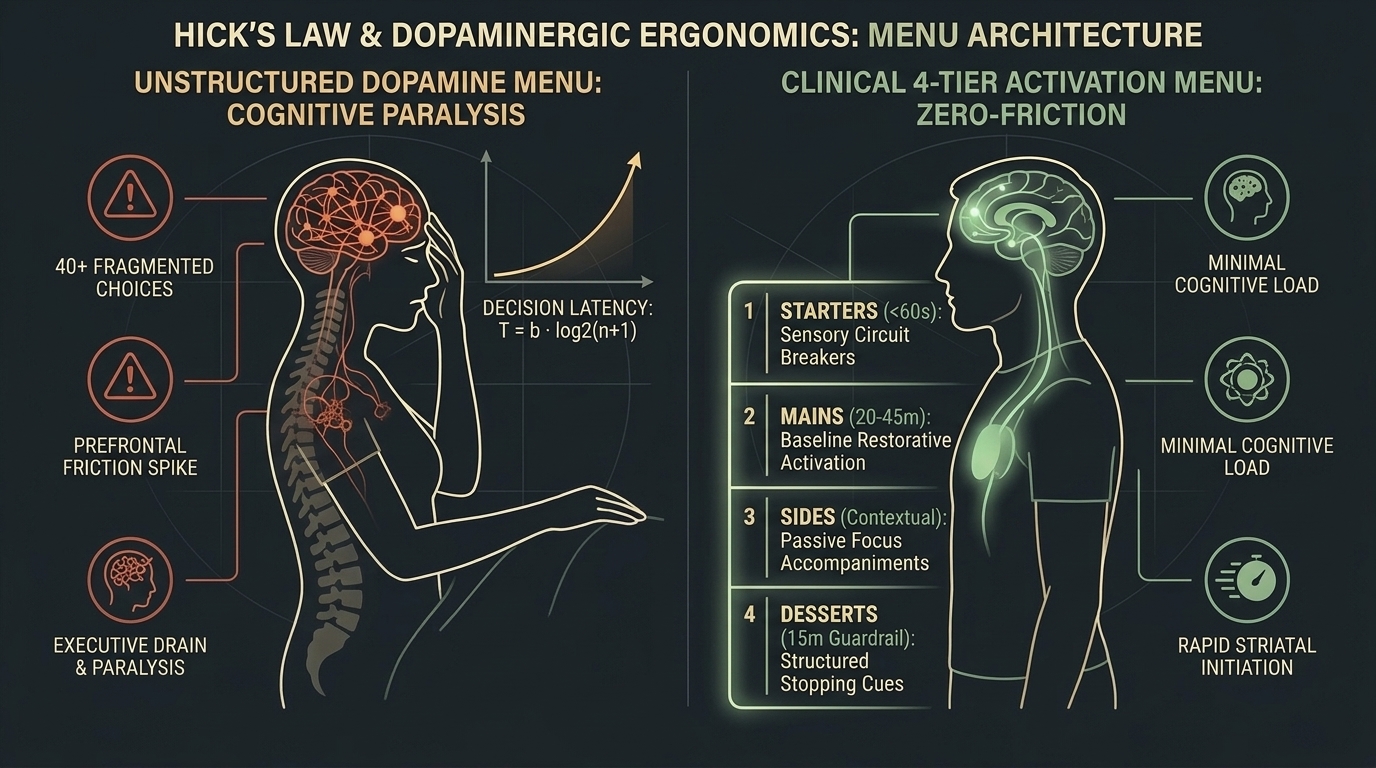
How to Build a Dopamine Menu That Actually Works
A dopamine menu can be a lifeline when you're stuck, or one more list you can't face. Here's why the pretty 40-item versions fail, and how to build a short, practical one in fifteen minutes.
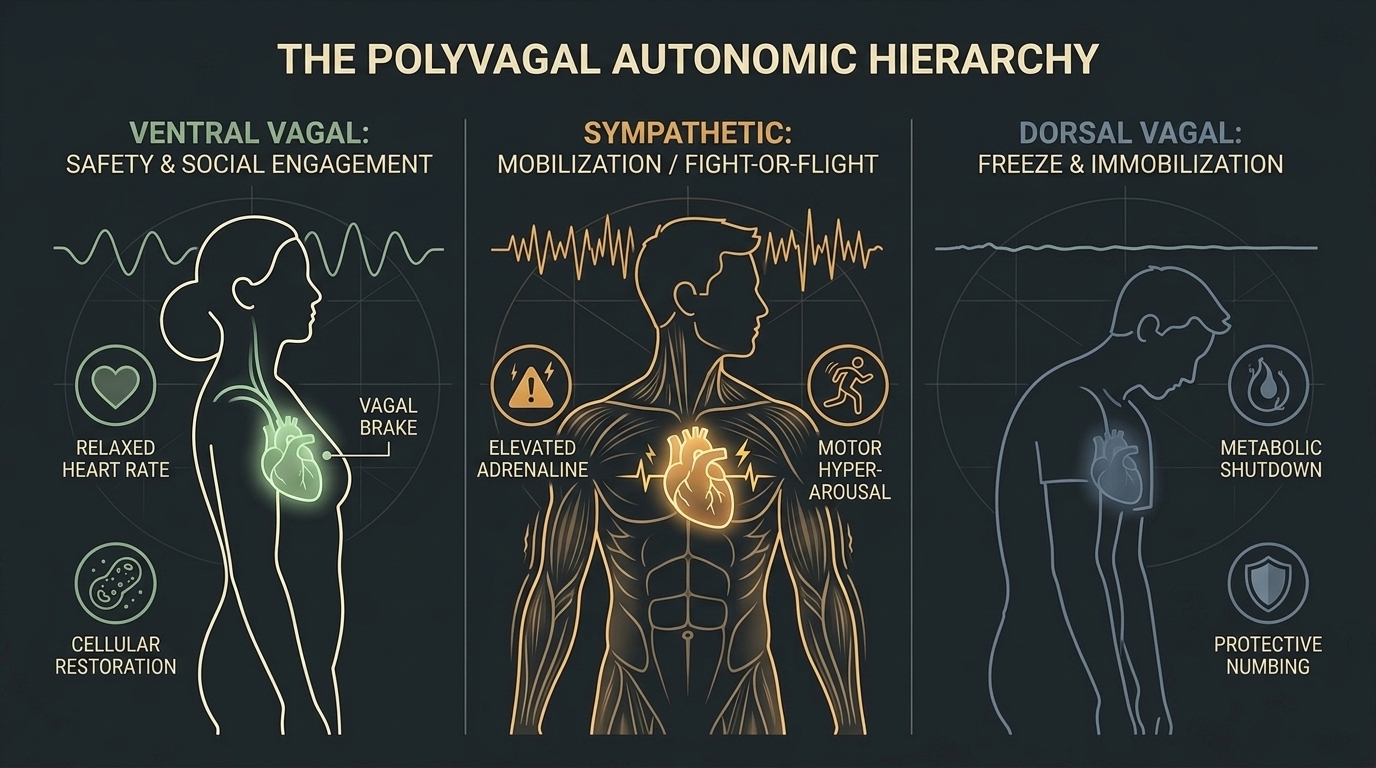
Why You Feel Paralyzed and How to Unstick Your Body
Fine at work, then frozen on the sofa for hours at home? Here's what people mean by "functional freeze," what might be behind it, and a gentle ladder for getting moving again.
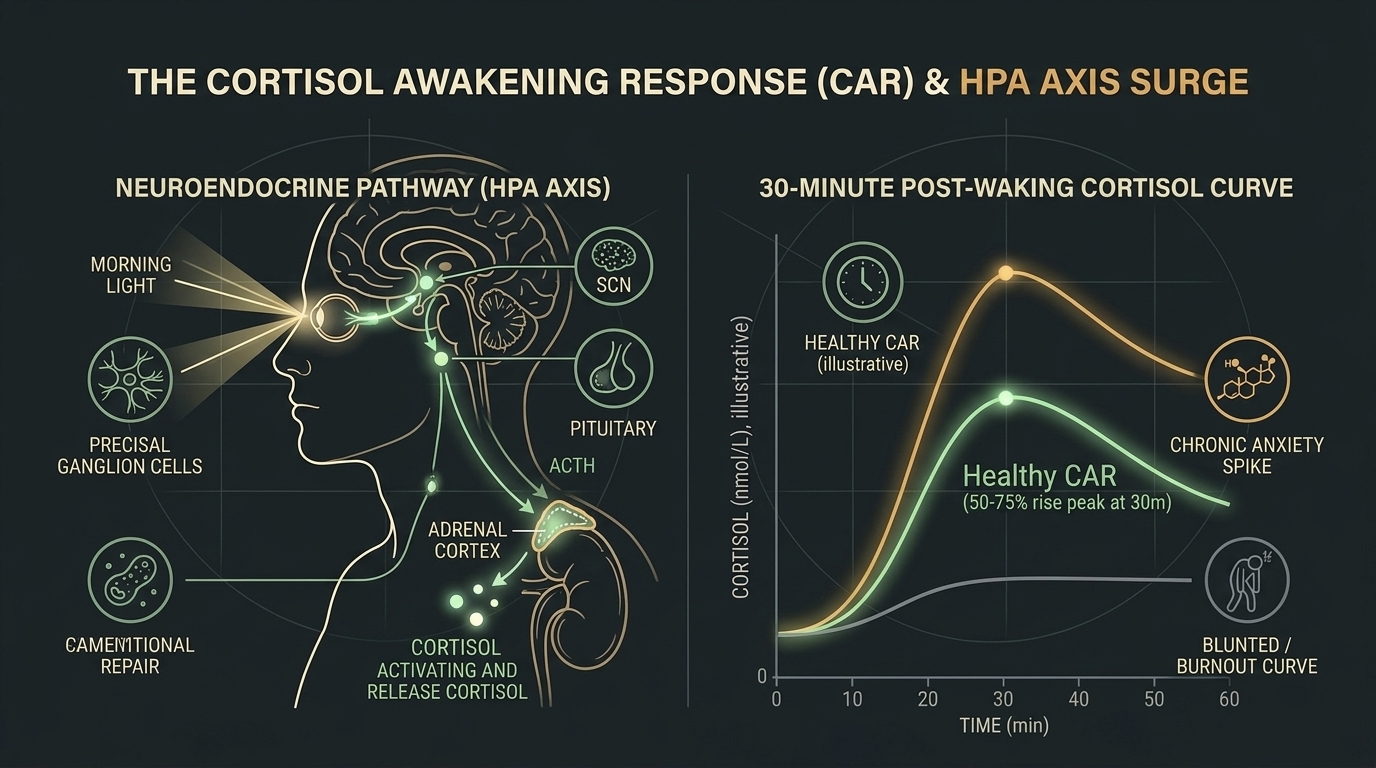
Why You Wake Up with Morning Anxiety: The CAR Surge
Waking up with a racing pulse and a sense of dread before the day has even started? Here's what the cortisol awakening response is, what it can and can't explain, and what tends to help.
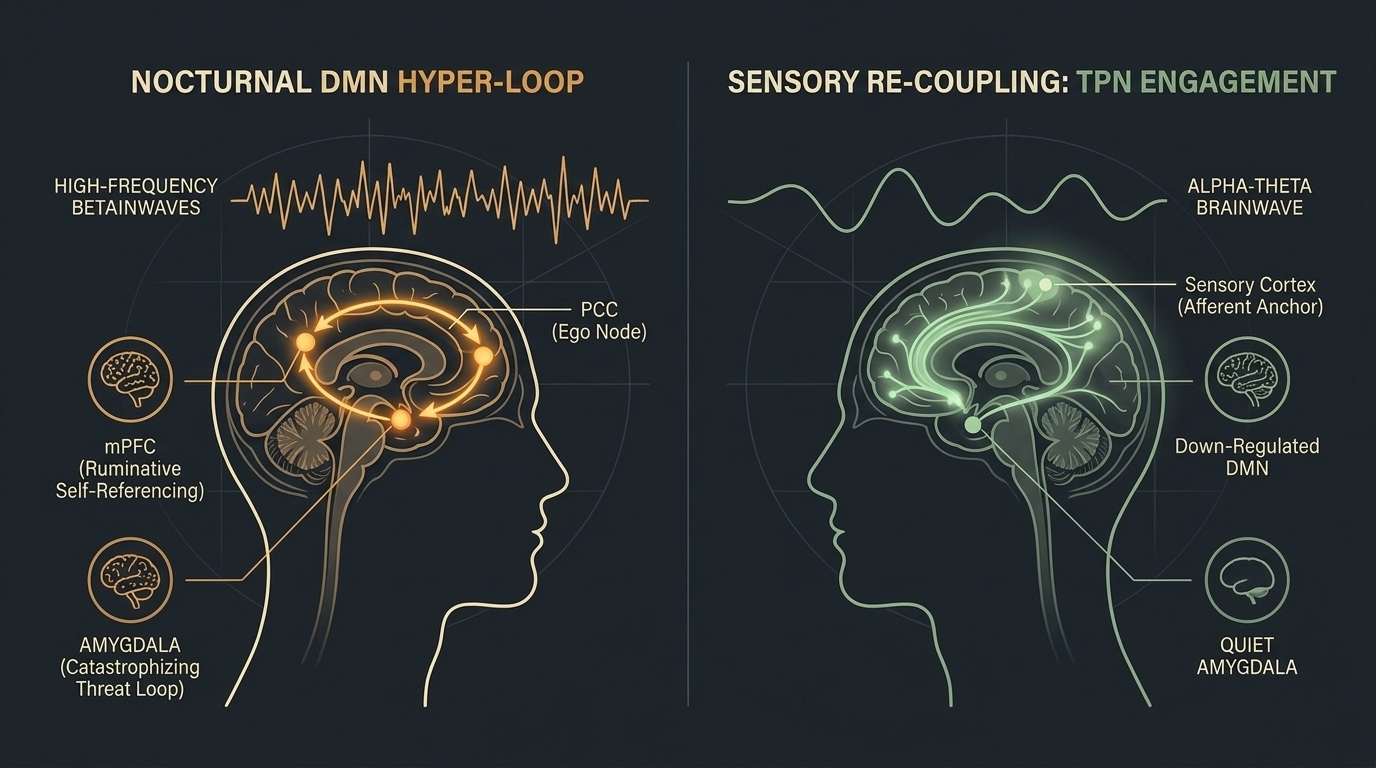
Why You Overthink at Night and How to Break the Loop
Lying awake at 2 AM with small problems suddenly feeling enormous? Here's why night makes thoughts louder, why trying to stop them backfires, and what actually helps.
A Moment for Reflection
Take a gentle breath. What is one somatic or cognitive observation from this guide that resonates with your current state? You are welcome to pause, note it in your journal, or return whenever you need grounding.