
Brain Stacking: Does the Viral Anti-Doomscrolling Trend Actually Work?
Brain stacking is a TikTok-born trend of replacing passive scrolling with a small pile of offline, mentally engaging activities (a book, a notebook, a puzzle, a sketchpad) kept within reach of wherever you usually scroll. Nobody has trialled brain stacking itself, so claims that it "repairs your attention" are marketing. But the idea rests on sound foundations: swapping a habit is easier than resisting it, and one experiment found that cutting back social media for three weeks reduced loneliness and depression. Keep your stack small and flexible, because turning rest into a timetable defeats the point.
Table of Contents10 sections
- What is brain stacking?
- Brain stacking vs. dopamine stacking vs. habit stacking
- Why it's taking off right now
- Does brain stacking actually work?
- Where the trend goes wrong
- How to build a low-pressure brain stack
- Brain stacking ideas: pick one from each
- Who should go gently
- The 60-second version
- Frequently Asked Questions
It's 11:40 pm. You pick up your phone "to check one thing." Forty-seven minutes later you're watching a stranger renovate a kitchen in a country you've never visited, and you can't remember opening the app.
Across the room, on a shelf: a novel you were excited about in August, a Sudoku book with three pages done, a notebook you swore you'd start using.
In the past few weeks, a big part of the internet has decided the fix is simply to move that shelf closer. It's called brain stacking. It spread on TikTok and Instagram through the autumn and has now reached The New York Times, Dazed, InsideHook and Indian outlets like Open Magazine. It's a little performative in places and quietly sensible in others. Here's what it is, what the research actually supports, and how to try it without turning your evenings into homework.
What is brain stacking?
Brain stacking means building a small collection of offline, mentally engaging activities (reading, journaling, puzzles, sketching, knitting) and keeping it within arm's reach, so there's an easy alternative when you'd normally grab your phone. Think of it as a menu you pick from, not a rulebook.
The trend is widely credited to TikTok creator Mandy Rulez (Amanda Sneed), who films her sessions at her local library in Indiana. Plenty of versions are quite literal: notebooks piled on puzzle books piled on novels, usually with a candle lit for atmosphere. Others run it as a timed hour. Hannah Busby, a content strategist in London, does a page of journaling, 15 minutes of Sudoku and 30 minutes of reading each evening, and says it leaves her feeling clearer after work.
None of the ingredients is new. Paperbacks and crosswords existed long before smartphones. What's new is the framing: not "quit your phone," but "give your hands and brain something better to pick up."
Brain stacking vs. dopamine stacking vs. habit stacking
The word "stacking" is doing a lot of work online, and these three get mixed up constantly.
| Term | What it means | Our take |
|---|---|---|
| Brain stacking | Keeping a set of offline, engaging activities within reach and choosing from them instead of scrolling | Sensible and low-risk, but untested as a method |
| Dopamine stacking | Layering several stimulating inputs at the same time (a show, a feed and snacks) | Not a scientific term. The real issue is divided attention. See our guide |
| Habit stacking | Attaching a new habit to an existing routine ("after I make tea, I write one page") | A self-help technique close to "if-then" planning, which has decent research behind it |
The simplest way to remember it: a brain stack is a menu you pick from, one thing at a time. Dopamine stacking is doing several stimulating things at once. They're nearly opposites.
Why it's taking off right now
Because most of us know the feeling of losing an evening to the phone. In India, a report by EY found that people averaged around five hours a day on mobile screens in 2024, with nearly 70 percent of that going to social media, gaming and video.
Then there's the research. A large 2025 meta-analysis in Psychological Bulletin pooled 71 studies and about 98,000 people and found that heavier short-form video use (Reels, Shorts, TikTok) was associated with poorer cognition, especially attention and the ability to hold back impulses, and with more stress and anxiety. That sounds alarming, but the details matter:
- Most of the studies were cross-sectional, so they can't show that scrolling causes the problems. People who are already anxious or struggle with attention may simply scroll more.
- According to coverage of the paper, how compulsively people used short videos tracked with problems more strongly than how many minutes they spent.
That second point is worth sitting with. The useful question may be less "how many hours?" and more "can I stop when I want to?" Brain stacking is aimed squarely at the autopilot pickup, the moment your thumb is on the screen before you've decided anything.
Does brain stacking actually work?
Honest answer: nobody has tested brain stacking as a method, and an Open Magazine explainer says as much. But several of its ingredients have support.
Swapping beats resisting. A psychologist at the wellbeing company EQ Minds describes it as simple behaviour change: instead of fighting the urge, you replace one habit with another. That fits what we know about habits, which are cued by the situation. A new routine in the same spot is usually easier than white-knuckling an old one.
Easy access matters more than the schedule. Georgetown psychologist Kostadin Kushlev, who studies doomscrolling, told reporters the promising part is "frictionless access to a variety of activities," and that the exact timing matters less. A Johns Hopkins neuroscientist added that keeping the cues consistent, such as the same spot, light or smell, helps habits form faster.
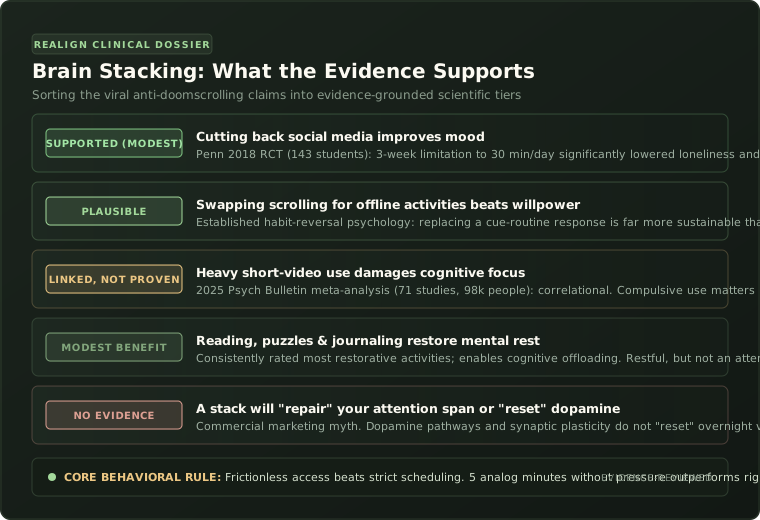
Using social media less can lift your mood. In a 2018 experiment at the University of Pennsylvania, 143 students who limited Facebook, Instagram and Snapchat to about 30 minutes a day for three weeks reported significantly less loneliness and depression than a control group. (Anxiety and fear of missing out fell in both groups, probably because simply tracking your use makes you more aware of it.) That trial tested cutting back, not stacking, and it was small and short. But it's among the best evidence we have that stepping back can help.
The activities themselves are good for most people. Reading is consistently rated among the most restful things people do, as we found in our piece on bed rotting. Writing about worries can help too. In one study, anxious students who wrote about their test worries for ten minutes before an exam did better than those who didn't. You'll find ready-made starting points in our 30 journal prompts for anxiety.
Here's how the claims stack up:
| The claim | What the evidence says |
|---|---|
| Swapping scrolling for something else is easier than just resisting it | Plausible. Consistent with habit research, but not tested for brain stacking itself. |
| Heavy short-video use hurts your attention | Linked, not proven. A 2025 meta-analysis of 71 studies found an association, but mostly from studies that can't show cause, and compulsive use mattered more than hours. |
| Cutting back social media improves mood | Supported, modestly. A three-week experiment with 143 students found less loneliness and depression. Small and short. |
| Reading and journaling are good for you | Modest. Reliably restful and helpful for many people, but not a brain upgrade. |
| A stack will "repair" your attention span or "reset" your dopamine | No evidence. Treat as marketing. See our look at "dopamine detoxes". |
| You need a perfect timed routine | Not needed. The experts quoted say easy access matters more than a schedule. |
Where the trend goes wrong
A few honest criticisms, because the trend has some real flaws.
The aesthetics can take over. The candle, the neat pyramid, the colour-coded pens. Critics point out that filming your phone break isn't quite a phone break. Fair enough, though one writer made the good point that people who most need the message are on these platforms, so the message has to appear there too.
It can turn rest into a to-do list. If you're racing through a timetable (journal, then Sudoku, then reading), you may be recreating the pressure of a nine-to-five. A writer at InsideHook suggests a gentler version: build your stack, then dip into one thing at a time, with no itinerary. Even the creator widely credited with starting the trend has said people may be overcomplicating it, and that it should be whatever you already have around the house.
It can become shopping. You don't need new notebooks, an e-reader or a special desk. A library card, a newspaper Sudoku, an old notebook and the hobby you bought supplies for six months ago will do.
It can quietly miss the point. For many people, scrolling isn't laziness. It's how they cope with stress, loneliness or a feeling they'd rather not feel. A pile of puzzle books won't fix that, and if it sounds like you, it may be worth talking to someone. (More on that below.)
How to build a low-pressure brain stack
Setting it up takes about ten minutes. The whole idea is to make the good option the easy one.
- Find your scroll spot. Where do you scroll most: bed, sofa, the bus, your desk? That's where the stack goes.
- Put three or four things within reach. One thing to read, one to write in, one with an ending (a puzzle or crossword), and optionally one to make with your hands. Choose things you actually want to do, not the "improving" book you feel you should read.
- Move your phone out of arm's reach. Charge it across the room, or in another room. This is the half of the trick that people skip, and it does most of the work.
- Make the first step tiny. One page, one clue, five minutes. A simple if-then plan helps: "If I get into bed, then I open my book before I touch my phone." Our guide on why waiting for motivation backfires explains why starting small works.
- Skip the schedule. Pick one thing, stay as long as you like, swap if you get bored. If you only manage five minutes, that counts.
- Add some friction to the scrolling side. Move Reels and Shorts off your home screen, log out of the worst offenders, and set an app timer. Make scrolling slightly harder and your stack slightly easier.
- Check in with yourself after a week. Rate your evenings from 1 to 10 on stack nights and scroll nights. Your own numbers will tell you more than any trend.
On a budget? A library card, second-hand book markets, a notebook from the local stationery shop, the Sudoku in the newspaper and a regional-language novel all work. Brain stacking should cost close to nothing.
Brain stacking ideas: pick one from each
- Read: short stories, poetry, a graphic novel, a comic you loved as a child, or a book you gave up on and now miss.
- Write: a brain dump, three lines about your day, a letter you won't send, or one of our journal prompts.
- Puzzle: Sudoku, a crossword, a jigsaw, chess problems or a logic puzzle.
- Make: sketching, colouring, doodling, embroidery, knitting or learning one chord on an instrument.
Who should go gently
If you have ADHD: visible cues can really help, because they cut the effort of starting. But a rigid schedule can become one more thing to fall off. Keep it tiny and flexible. Our dopamine menu guide uses the same principle.
If you're burned out: a stack should be rest, not another self-improvement project. If it starts to feel like homework, drop it. See our burnout recovery guide.
If you scroll to numb something: if you reach for your phone mainly to avoid anxiety, loneliness or low mood, or if you've lost interest in things for more than a couple of weeks, it's worth talking to a doctor or mental health professional. Replacing the scrolling won't fix what's underneath.
Free, Confidential 24/7 Helplines in India:
• Tele-MANAS (Ministry of Health): Dial 14416 (toll-free, 24/7, multiple languages)
• KIRAN Helpline (Ministry of Social Justice): Dial 1800-599-0019
• If you are in immediate danger, call 112.
The 60-second version
- Brain stacking means keeping a few offline activities within reach, so there's an easy alternative to scrolling.
- It's not the same as dopamine stacking (doing several stimulating things at once) or habit stacking (attaching a habit to a routine).
- Nobody has tested it as a method. Its ingredients have support: swapping habits, easy access, cutting back social media, and reading and writing.
- Compulsive use seems to matter more than hours, so aim at the autopilot pickup.
- Keep it small, cheap and flexible. If it feels like homework, you've overdone it.
- Move the phone out of reach, put the stack in your scroll spot, and start with five minutes.
Take the next step
Curious whether a stack changes how your evenings feel? Open ReAlign and do a two-minute check-in on a stack night and a scroll night. Your own patterns will tell you what helps. Start free.
ReAlign is a self-reflection tool, not a clinical diagnostic or crisis service. This article is general information, not medical advice. If you're in distress or thinking about harming yourself, contact a local helpline or emergency services right away.
Know someone who needs this insight?
Mental wellness and nervous system regulation spread through thoughtful sharing. Send this research-backed guide to a colleague, partner, or friend.
Scientific References & Peer-Reviewed Literature
ReAlign guides are grounded in peer-reviewed neuroscience, clinical psychiatry, and cognitive psychology research.
- Nguyen, L., et al. (2025). Feeds, feelings, and focus: A systematic review and meta-analysis examining the cognitive and mental health correlates of short-form video use. Psychological Bulletin, 151(9), 1125-1146.[Source]
- Dolan, E. W. (2025, December 18). Large meta-analysis links TikTok and Instagram Reels to poorer cognitive and mental health. PsyPost.[Source]
- Hunt, M. G., Marx, R., Lipson, C., & Young, J. (2018). No more FOMO: Limiting social media decreases loneliness and depression. Journal of Social and Clinical Psychology, 37(10), 751-768.[Source]
- Ramirez, G., & Beilock, S. L. (2011). Writing about testing worries boosts exam performance in the classroom. Science, 331(6014), 211-213.[Source]
- Hammond, C. (2019). The Art of Rest: How to Find Respite in the Modern Age. Canongate.
- Doomscrolling? Nah, try brain stacking (2026, November 13). Oman Observer (syndicated report).[Source]
- Garrity, T. (2026, November 1). "Brain stacking" is your ticket out of scrolling hell. InsideHook.[Source]
- Quick take: What is brain stacking? Seven things to know about the trend that wants you off your phone. Open Magazine.[Source]
- How to stop doomscrolling, according to a mental health expert. VICE.[Source]
- Garzon, H. (2026, November 3). Want to cut down screen time? Here's what to know about the "brain stacking" TikTok trend. Philstar Life.[Source]
- Indians spent 1.1 trillion hours on smartphones in 2024, EY says (2025, March 27). Bloomberg.[Source]
Frequently Asked Questions
What is brain stacking?
Brain stacking is a social media trend, credited to TikTok creator Mandy Rulez, of keeping a small collection of offline activities (reading, journaling, puzzles, sketching) within reach so there's an easy alternative to scrolling. Some people do it as a timed session, but you can also simply pick one thing at a time.
Is brain stacking the same as dopamine stacking?
No. Brain stacking is choosing from a set of offline activities instead of scrolling. Dopamine stacking is a loose online term for layering several stimulating inputs at once, like watching a show while scrolling and snacking. Habit stacking is a third idea: attaching a new habit to an existing routine.
Does brain stacking actually work?
Nobody has trialled brain stacking as a method, so there's no direct proof. But several ingredients have support: replacing a habit is easier than resisting it, easy access to alternatives helps, and an experiment found that limiting social media for three weeks reduced loneliness and depression. Claims that it repairs attention or resets dopamine aren't backed by evidence.
How long should a brain stacking session be?
As long as you like. Some people do a set hour, but the experts quoted in coverage of the trend say easy access matters more than timing. Five minutes counts, and it's fine to stop when you're done or swap activities.
What should I put in my brain stack?
Choose one or two activities you genuinely enjoy from each of these: something to read, something to write in, a puzzle, and something to make with your hands. Use what you already own, such as a book you didn't finish, a notebook or a newspaper puzzle. You don't need to buy anything.
Can brain stacking help with ADHD or burnout?
It can help some people, because visible cues make starting easier. But a rigid timetable can become another thing to fall off, so keep it tiny and flexible. If you're burned out, treat it as rest, not a project. If you think ADHD or burnout is affecting you, speak to a professional.
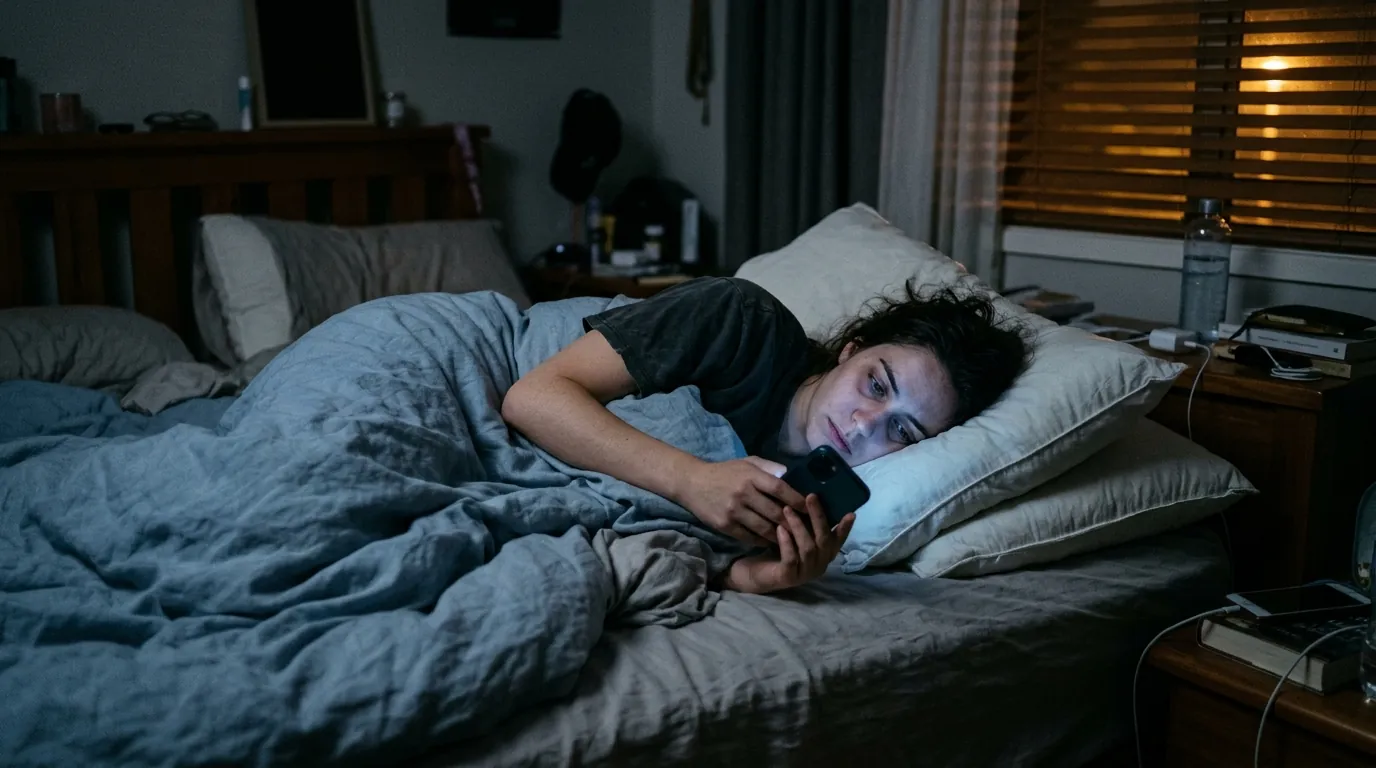
Why Bed Rotting Makes You More Tired
Spent the weekend in bed to recharge and woke up feeling heavier? Here's what's actually going on, and a gentle ten-minute way back up that doesn't involve forcing yourself to be productive.
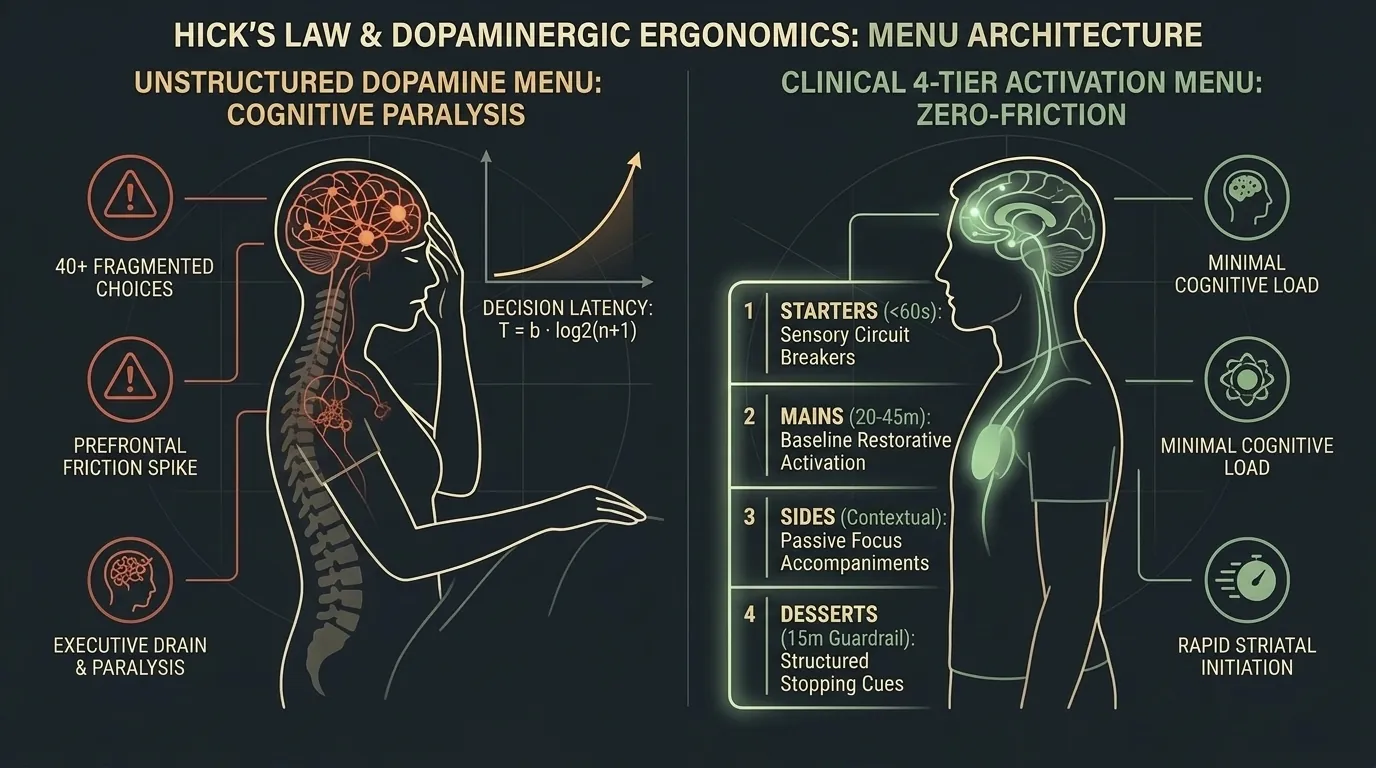
How to Build a Dopamine Menu That Actually Works
A dopamine menu can be a lifeline when you're stuck, or one more list you can't face. Here's why the pretty 40-item versions fail, and how to build a short, practical one in fifteen minutes.
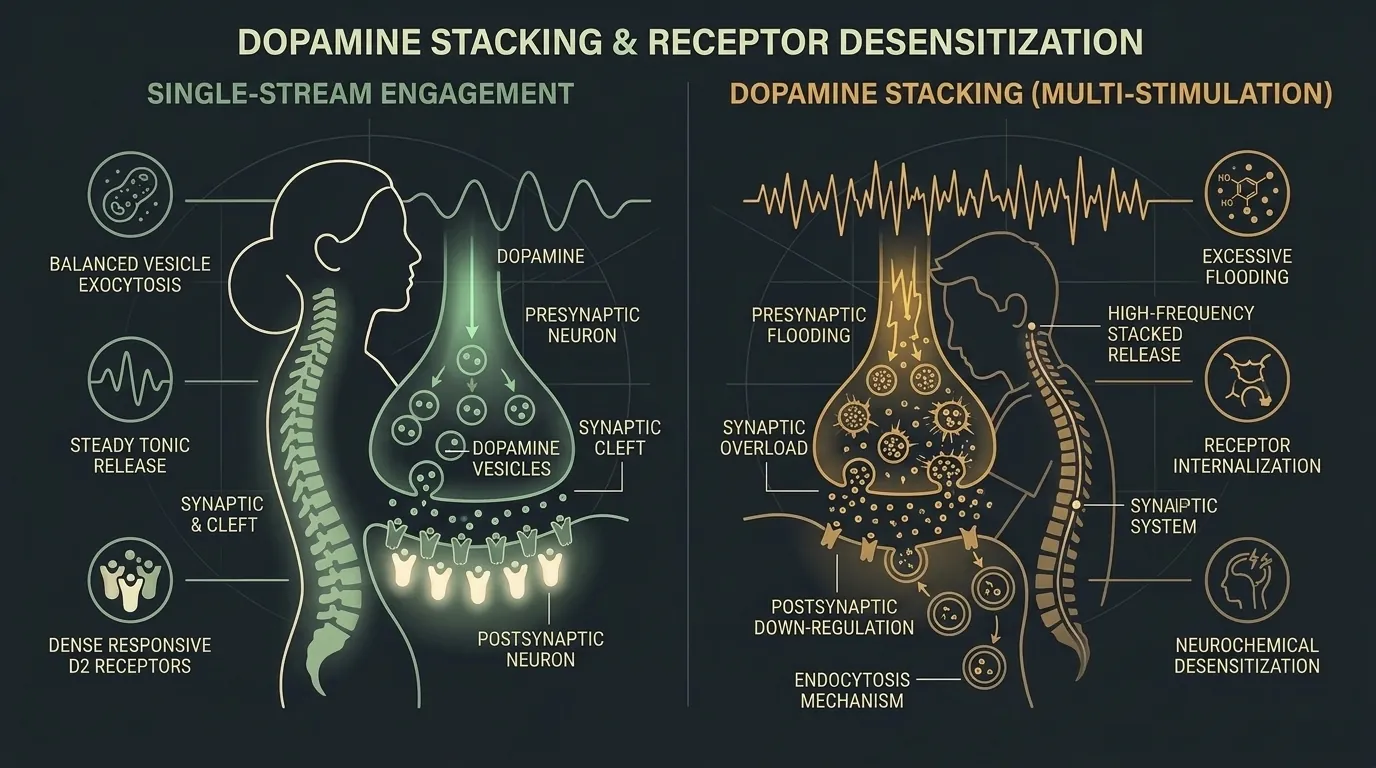
Why You Feel Drained Doing Nothing: Dopamine Stacking
Watching a show, scrolling your phone and snacking all at once, then feeling wrecked? Here's what "dopamine stacking" really means, what the research supports, and how to give your attention a break tonight.
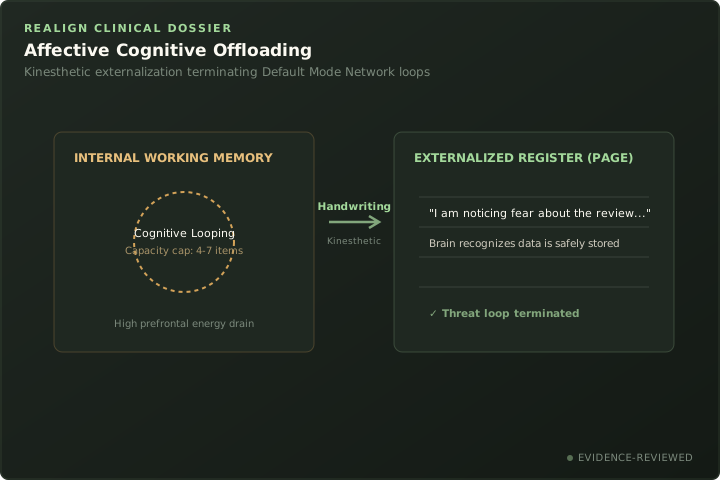
30 Journal Prompts for Anxiety and Racing Thoughts
Mind spinning with what-ifs? Here are 30 journal prompts sorted by the kind of worry you have, a simple ten-minute way to use them, and an honest look at what writing can and can't do.
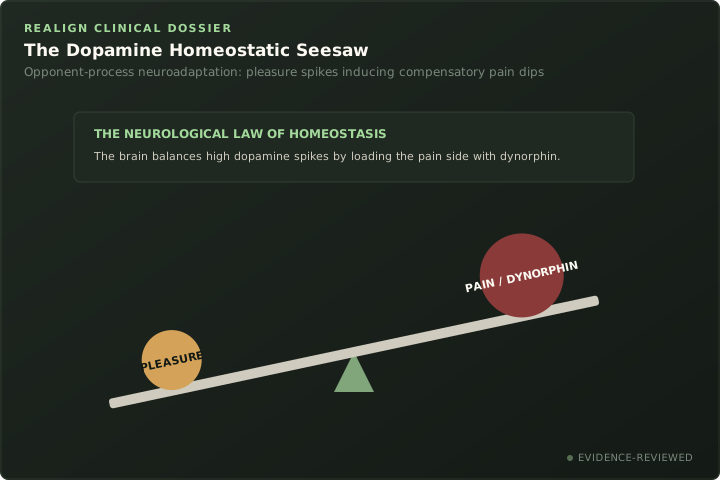
How to Recover from Dopamine Burnout and Numbness
Does nothing excite you anymore? "Dopamine burnout" is an informal label, but the flat, restless feeling is real. Here's what research suggests, and a realistic one-week experiment.
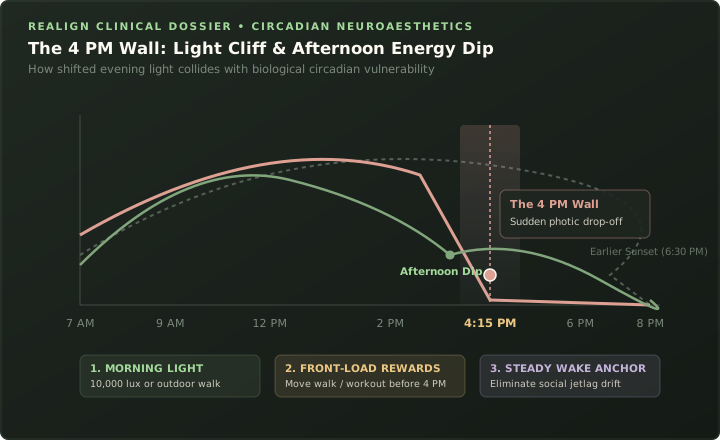
The 4 PM Wall: Why Early Darkness Crushes Your Mood (and What Actually Helps)
You look up from your laptop at 4:15 pm and it’s already dark. Your energy drops, your brain goes soft, and an ordinary Tuesday feels heavy. Here is what is happening physiologically, and a practical reset you can start today.
A Moment for Reflection
Take a gentle breath. What is one somatic or cognitive observation from this guide that resonates with your current state? You are welcome to pause, note it in your journal, or return whenever you need grounding.